
news
— —
Dry-Type or Oil-Filled Single-Phase Distribution Transformer?
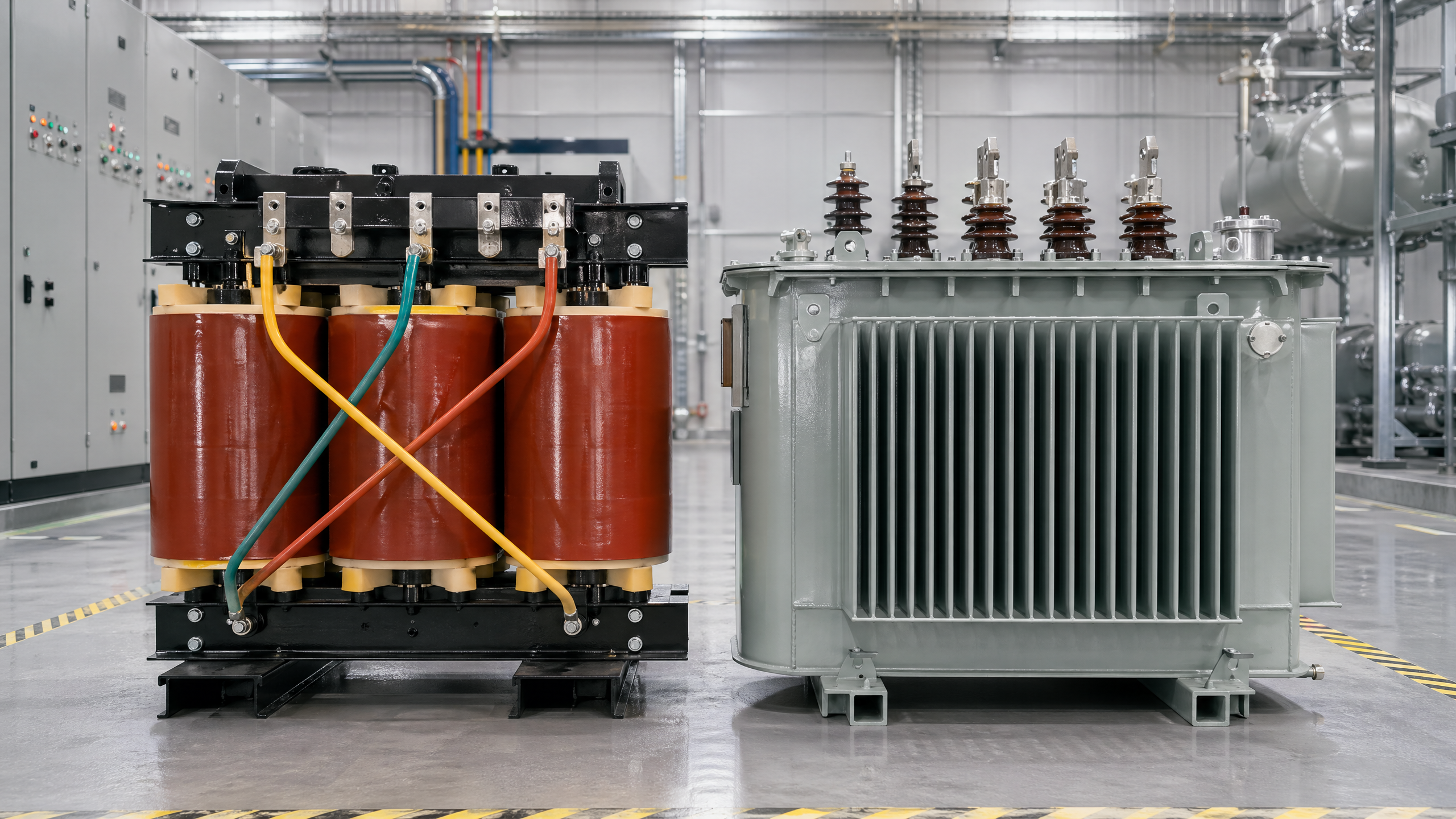
Choosing between a dry-type and oil-filled SINGLE-PHASE DISTRIBUTION TRANSFORMER can directly affect safety, efficiency, maintenance costs, and installation flexibility. For researchers, buyers, and distributors in the industrial equipment sector, understanding the differences is essential to making the right investment. This guide outlines key performance factors, application scenarios, and selection tips to help you compare both transformer types with confidence.
In practical procurement, the choice is rarely based on one factor alone. A single-phase distribution transformer may operate in a commercial building, a rural power network, a workshop, a renewable energy support system, or a compact utility room where ventilation, noise, and maintenance access all matter. For that reason, buyers usually evaluate at least 4 dimensions at once: safety, operating environment, total lifecycle cost, and serviceability.
For distributors and project contractors, the decision also affects inventory strategy, installation guidance, after-sales workload, and long-term customer satisfaction. A transformer that looks economical at the quotation stage can become costly if it requires higher maintenance frequency, stricter fire separation, or a larger installation footprint than expected.
Shandong Yide Transformer Co., Ltd., based in Liaocheng, Shandong, manufactures oil-immersed transformers, dry-type transformers, box-type substations, and high and low voltage switchgear. With ISO9001 and ISO14001 system certifications, modern production equipment, testing capabilities, and annual transformer production capacity up to 500000 KVA and below, the company supports industrial buyers, resellers, and engineering partners seeking reliable transformer solutions for varied operating conditions.
Understanding the Core Difference Between Dry-Type and Oil-Filled Units
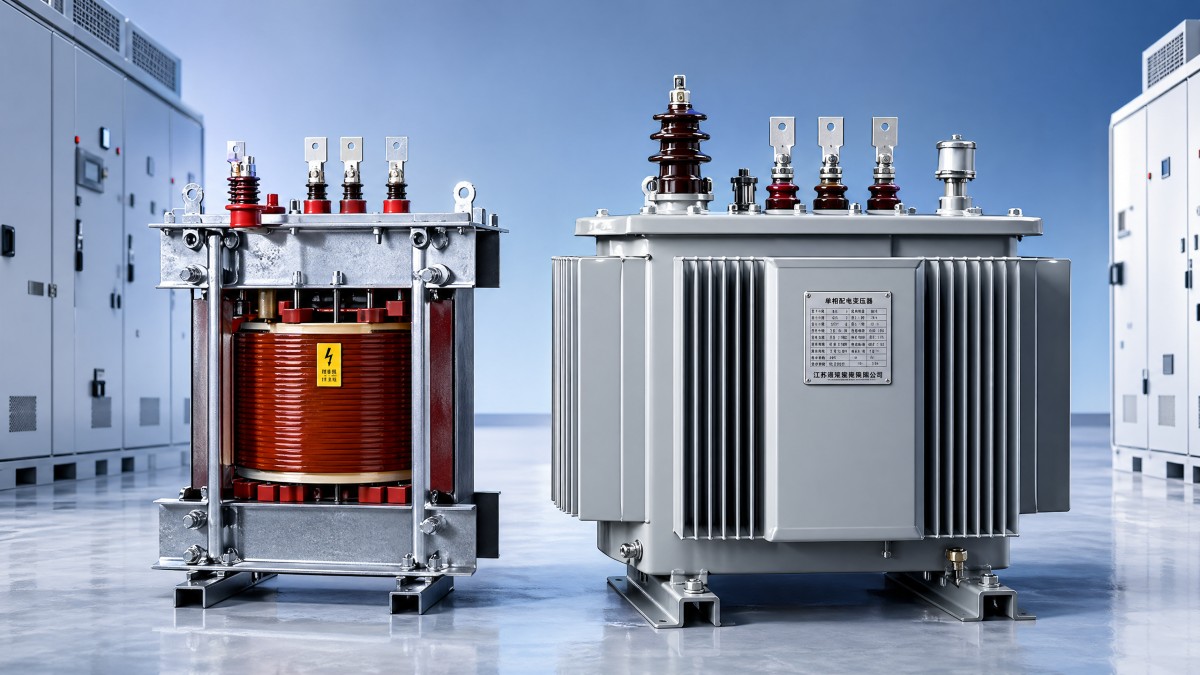
A dry-type single-phase distribution transformer uses air or solid insulation materials instead of insulating oil. The windings are typically cast resin or vacuum pressure impregnated, depending on design requirements. An oil-filled transformer, by contrast, uses mineral oil or another insulating liquid for both insulation and heat dissipation. This structural difference affects cooling efficiency, enclosure requirements, and installation options.
In most industrial and utility discussions, oil-filled transformers are known for stronger heat dissipation and wide outdoor adaptability, especially in capacities from tens of kVA up to higher distribution ranges. Dry-type transformers are often preferred in indoor environments where fire safety, cleanliness, and reduced leakage risk are priorities. For a single-phase distribution transformer, both types can be technically suitable, but the surrounding environment changes the better fit.
How the insulation system changes performance
The insulation medium influences temperature rise, overload tolerance, and routine maintenance needs. Oil-filled designs usually offer more efficient cooling under continuous load, which can help in applications with long operating hours of 8–24 hours per day. Dry-type units simplify routine checks because there is no oil level, oil quality, or leakage monitoring, but they may need stricter ventilation planning when installed in enclosed rooms.
Typical selection logic used by buyers
- If the transformer is installed indoors near people, dry-type is often shortlisted first because of cleaner operation and lower fluid-related risk.
- If the project is outdoors, in harsh climates, or requires strong thermal performance, oil-filled is often more competitive.
- If maintenance resources are limited across remote sites, buyers compare not only upfront price but also inspection frequency over 3–5 years.
The table below summarizes the most decision-critical differences relevant to industrial equipment procurement and project design.
The key conclusion is straightforward: dry-type and oil-filled transformers are not competing as universally better or worse products. They solve different operating challenges. A smart buyer matches transformer design to the actual environment, duty cycle, and maintenance capability rather than focusing only on purchase price.
Performance, Safety, and Operating Cost in Real Industrial Scenarios
When evaluating a single-phase distribution transformer, purchasing teams often compare 3 cost layers: initial procurement, installation-related cost, and 5–10 year operating cost. Oil-filled units are often cost-effective in terms of cooling performance per kVA, while dry-type units can reduce some building-side expenses in locations where oil containment, spill handling, or strict indoor fire zoning would otherwise be required.
Safety must be interpreted by context. In indoor substations, schools, hospitals, commercial facilities, and densely occupied workshops, dry-type transformers are often valued because they avoid oil leakage concerns and are easier to integrate into enclosed spaces. In outdoor networks, construction sites, or agricultural distribution systems, oil-filled transformers remain widely used because they tolerate environmental variation well and can be a practical choice under heavy thermal demand.
Thermal behavior and load profile
A transformer serving a stable 50%–70% load behaves differently from one facing daily peaks above 85%. Oil-filled transformers generally manage heat more effectively during long continuous operation. Dry-type units may perform very well too, but room temperature, airflow path, and dust level become more important. If ambient temperature regularly rises above 40°C, ventilation design should be reviewed early in the project stage.
Noise, cleanliness, and maintenance access
Noise and cleanliness also influence the final decision. In offices, public buildings, or indoor equipment rooms adjacent to staff areas, low-noise and low-contamination requirements may favor dry-type models. In industrial yards where access is open and background noise is already high, oil-filled equipment may not face the same limitation. Buyers should also check whether the site can support quarterly visual inspection, annual electrical testing, and rapid fault isolation if needed.
The following matrix helps compare practical trade-offs that affect ownership cost and project risk.
For many buyers, the most expensive mistake is not choosing the “wrong brand” but choosing the wrong transformer type for the site. If a compact indoor installation later needs ventilation reconstruction or oil containment changes, total project cost can rise far beyond the original equipment savings.
Which Applications Fit Each Transformer Type Best
Application matching is where purchasing confidence improves most. Dry-type single-phase distribution transformers are commonly selected for malls, office buildings, healthcare environments, educational facilities, and indoor industrial rooms where airflow can be controlled. Oil-filled units are frequently chosen for utility feeders, rural electrification, outdoor machinery support, mining support zones, and factory perimeters where weather resistance and strong cooling are valuable.
Distributors should also consider customer profile. A commercial EPC contractor may repeatedly request dry-type units for internal building distribution, while an agricultural infrastructure integrator may prefer oil-filled models for dispersed outdoor points. Segmenting stock and proposal templates by end-use can reduce quotation time by 20%–30% in repeat business environments.
Typical use cases by environment
- Indoor public buildings: dry-type is often preferred for cleaner operation and reduced fluid management needs.
- Outdoor utility poles or ground-mounted stations: oil-filled is often more practical for thermal performance and environmental exposure.
- Dusty workshops: selection depends on enclosure grade, ventilation quality, and maintenance frequency every 3–6 months.
- Renewable energy support systems: both can be suitable depending on layout, compactness, and protection requirements.
In some projects, the decision is not limited to standard distribution alone. Special processes such as electrochemical conversion, industrial rectification, and specialized power treatment may require other transformer categories. In such cases, buyers may also review products like SPECIAL TRANSFORMER-RECTIFIER TRANSFORMER when the electrical system includes rectifier-based loads or custom process requirements.
Common mismatch risks
One common mistake is installing a dry-type transformer in a poorly ventilated room with heavy dust accumulation and expecting maintenance-free operation for years. Another is placing an oil-filled unit indoors without early coordination on fire separation, oil management, or access clearance. In both cases, the transformer itself may be technically sound, but the site planning introduces operational risk.
A practical rule is to confirm 5 application conditions before ordering: indoor or outdoor location, average and peak load, ambient temperature range, maintenance access frequency, and local safety compliance expectations. These checks reduce selection errors and improve quotation accuracy.
Key Selection Criteria for Buyers, Contractors, and Distributors
A professional transformer selection process should move from environment to electrical load, not the other way around. Buyers first define where the unit will operate, then check load profile, voltage class, protection requirements, and service expectations. For single-phase distribution applications, a disciplined review of 6 checkpoints can prevent under-specification or unnecessary overspending.
Six checkpoints before issuing a purchase order
- Confirm installation location: indoor room, rooftop enclosure, outdoor pad, pole-mounted point, or integrated box-type station.
- Verify load characteristics: steady load, cyclic load, motor starting impact, harmonic presence, and future expansion margin of 10%–25%.
- Check environmental conditions: ambient temperature, humidity, dust, altitude, and ventilation path.
- Review compliance needs: project-side requirements for testing, acceptance, and local electrical standards.
- Assess maintenance capability: on-site staff level, inspection intervals, spare parts access, and service response expectations.
- Compare total cost: equipment price, civil modifications, auxiliary protection, and operating cost over 3–10 years.
For industrial equipment sourcing, manufacturer capability also matters. Shandong Yide Transformer Co., Ltd. produces oil-immersed transformers, dry-type transformers, box transformers, and switchgear, with tested product series such as S13, S20, S22, SCB12, SCB14, and SCB18 having passed routine, type, and special tests by the National Quality Supervision and Inspection Center. This matters to buyers because production range and test capability often translate into better consistency, documentation support, and customization coordination.
What distributors should ask manufacturers
Distributors and agents should ask at least 4 practical questions: what capacity range is available, how long the standard production cycle is, what test documents can be provided before shipment, and how customization is handled for enclosure, voltage, or special operating conditions. This improves bid responsiveness and reduces post-order technical clarification delays.
If the end-user project includes process-specific conversion equipment, it may also be useful to evaluate whether the supplier can support special transformer categories alongside standard distribution models, including solutions such as SPECIAL TRANSFORMER-RECTIFIER TRANSFORMER in suitable industrial process scenarios.
Installation, Maintenance, and Long-Term Reliability Planning
Selecting the right transformer is only the first half of lifecycle performance. The second half depends on installation quality, periodic inspection, and realistic operating discipline. Many transformer failures are linked not to manufacturing defects but to heat buildup, loose connections, contamination, overloading, or neglected inspection points over 12–36 months of operation.
Dry-type transformers need adequate airflow, clean surroundings, and periodic dust removal, especially in industrial buildings where fine particles accumulate on coils or ventilation paths. Oil-filled transformers require sealing inspection, oil level monitoring, and attention to corrosion, external contamination, and possible leakage points. In both cases, terminal torque checks and temperature monitoring should be part of preventive maintenance planning.
Recommended maintenance focus by type
The table below provides a practical maintenance reference that purchasing teams can convert into after-sales or site service checklists.
The main takeaway is that reliability improves when maintenance tasks are matched to actual risk points. A dry-type unit cannot be treated as maintenance-free, and an oil-filled unit should not be assumed difficult if proper inspection routines are established from day one.
Implementation advice for project teams
- Reserve clear installation access for inspection and cable termination.
- Check ventilation, drainage, and grounding before energization.
- Record baseline temperature and load data during the first 30 days of operation.
- Set a maintenance interval calendar at handover instead of waiting for the first fault event.
For buyers handling multi-site deployment, standardized commissioning and maintenance forms can reduce inconsistency across projects and help compare performance across 10, 20, or more installed units over time.
Frequently Asked Questions Before Final Selection
Which type is better for indoor installation?
In many indoor projects, a dry-type single-phase distribution transformer is the first option to evaluate because it avoids insulating oil management and fits well in buildings where cleanliness and occupancy matter. However, indoor suitability still depends on room ventilation, heat dissipation, and clearance planning. “Indoor” alone does not guarantee the right answer without site review.
Which type usually has lower maintenance?
Dry-type units often reduce oil-related maintenance work, but they still require periodic cleaning and inspection. Oil-filled transformers add checks related to oil level and sealing, yet in outdoor service they can be very manageable. The better question is not “which has zero maintenance,” but “which maintenance pattern best fits the site team and operating environment over 3–5 years.”
How should distributors handle mixed demand from different industries?
A practical approach is to segment by application: indoor commercial, outdoor utility, industrial workshop, and process-specialized projects. Then align stock, brochures, and technical checklists to each group. This allows sales teams to qualify customer needs in 5–10 minutes and recommend dry-type, oil-filled, or specialized transformer options with better accuracy.
What should buyers request from the manufacturer before ordering?
Request the rated parameters, applicable environment guidance, test documentation, outline dimensions, installation recommendations, and after-sales response scope. If the project is customized, confirm the production timeline, acceptance process, and any special enclosure or connection requirements early. This is especially important when multiple equipment packages must arrive within the same 2–6 week project window.
Dry-type and oil-filled single-phase distribution transformers each offer clear advantages when applied to the right scenario. The most reliable procurement strategy is to compare installation environment, load profile, safety needs, maintenance capacity, and long-term operating cost together rather than relying on a single preference. For researchers, buyers, and distribution partners seeking dependable transformer support, Shandong Yide Transformer Co., Ltd. offers broad manufacturing capability across oil-immersed transformers, dry-type transformers, box substations, and switchgear. Contact the team today to discuss your project conditions, request a tailored recommendation, or get more product details for your next transformer procurement plan.