
news
— —
Single-Phase Distribution Transformer Losses: What Drives Total Cost?
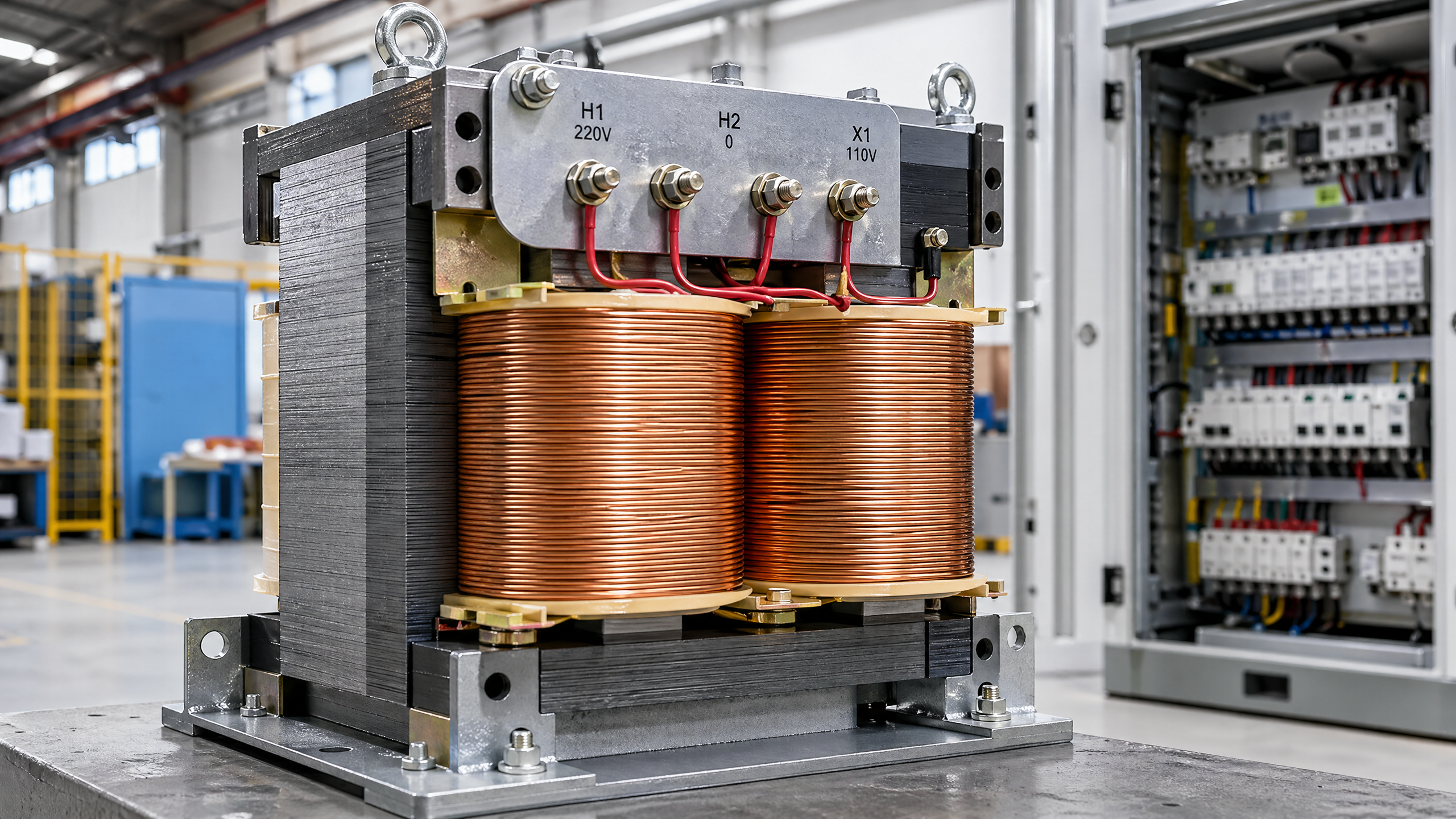
When evaluating a SINGLE-PHASE DISTRIBUTION TRANSFORMER, purchase price is only part of the equation. No-load loss, load loss, operating efficiency, maintenance demands, and service life all shape the true total cost. For researchers, buyers, and distributors, understanding what drives these losses is essential to selecting reliable, low-loss transformer solutions that deliver long-term value in industrial and power distribution applications.
In industrial equipment and power distribution projects, a transformer often operates for 20 to 30 years, which means even a modest difference in watts of loss can become a significant operating expense over time. For procurement teams, this turns transformer selection into a lifecycle cost decision rather than a one-time capital purchase. For distributors and agents, it also affects how confidently they can recommend one product line over another.
Shandong Yide Transformer Co., Ltd., based in Liaocheng, Shandong, focuses on oil-immersed transformers, dry-type transformers, box-type substations, and high- and low-voltage switchgear. With ISO9001 and ISO14001 management system certifications, modern production and test equipment, and product lines including S13, S20, S22, SCB12, SCB14, and SCB18, the company serves buyers looking for low-loss, low-noise, and reliable distribution solutions in practical operating environments.
What Makes Up the Total Cost of a Single-Phase Distribution Transformer
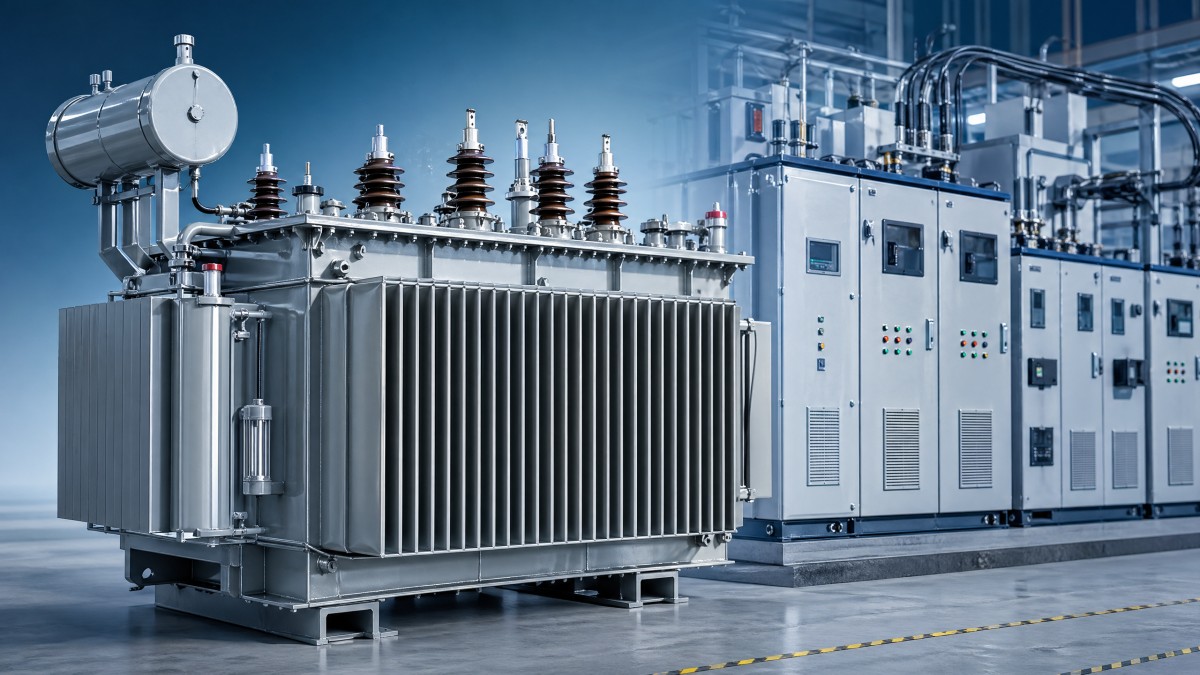
The total cost of a single-phase distribution transformer includes at least 5 major parts: initial purchase price, no-load loss cost, load loss cost, maintenance cost, and replacement risk over the service life. In many low-voltage and medium-voltage distribution applications, the energy lost during operation can exceed the original equipment price within 8 to 15 years, especially in systems running 24 hours per day.
No-load loss, also called core loss, occurs whenever the transformer is energized, even if the load is very low. This is particularly important for rural networks, light commercial feeders, temporary facilities, and seasonal applications where the unit remains powered for long periods with fluctuating demand. Buyers sometimes underestimate this cost because it is invisible in day-one quotations.
Load loss, mainly caused by winding resistance and stray losses, rises with current. Because load loss changes roughly with the square of the load factor, a transformer running at 80% load can produce far more copper loss than one running at 50%. For plants with stable production lines, motor loads, or long operating shifts, this becomes a key cost driver.
There are also indirect costs. Higher losses usually mean higher temperature rise, which can shorten insulation life, increase oil aging in oil-immersed units, and reduce long-term reliability. In a procurement review, that translates into higher inspection frequency, more downtime risk, and a less attractive total ownership profile for end users and channel partners.
A practical way to break down cost
The following table helps researchers, purchasing managers, and distributors compare the main cost components beyond the quoted unit price.
The key takeaway is simple: a lower upfront quote does not automatically mean a lower project cost. In many industrial distribution scenarios, the best-value transformer is the one that balances capital cost with verified low loss, controlled temperature rise, and dependable mechanical strength.
The Main Drivers of Transformer Losses in Real Operating Conditions
Transformer losses are not random. They are shaped by design materials, manufacturing quality, operating load, ambient conditions, and system stability. For single-phase distribution transformers, the most common loss drivers can usually be grouped into 4 categories: core design, conductor design, operating profile, and site conditions.
Core loss depends heavily on the magnetic material and the quality of core processing. Better silicon steel, lower hysteresis behavior, tighter lamination control, and more precise assembly can reduce continuous energy waste. This is one reason low-loss product families such as S13, S20, and S22 are often preferred in cost-sensitive power distribution planning where long duty cycles make every watt matter.
Load loss is strongly influenced by conductor cross-section, winding layout, joint quality, and cooling effectiveness. A transformer sized too close to its daily peak may operate hotter for 6 to 12 hours per day, accelerating insulation stress. On the other hand, excessive oversizing can lower load efficiency if the unit spends most of its time well below its economic loading range.
Site conditions also matter more than many buyers expect. Ambient temperatures above 40°C, poor ventilation, harmonic-rich loads, frequent overloads, or voltage imbalance can all increase effective losses or reduce useful life. In remote or outdoor installations, this makes enclosure protection, impact resistance, and short-circuit strength just as important as the nameplate values.
Loss drivers buyers should review during technical evaluation
- Core material grade and process consistency, because no-load loss is present 8,760 hours per year in continuously energized service.
- Winding design and conductor quality, because load loss rises quickly at 60%, 80%, and 100% loading points.
- Temperature rise performance, since every sustained increase in operating heat can affect insulation aging rate and maintenance planning.
- Short-circuit resistance and mechanical robustness, especially in industrial networks with inrush currents and motor starts.
- Application-specific loading profile, including daytime peak, nighttime idle state, seasonal fluctuations, and future expansion margin.
Why matching the transformer to the load profile matters
A transformer serving a farm pump, a small manufacturing unit, and a residential feeder may all have the same rated capacity, but their economic loss behavior can be very different. If the average load is only 20% to 30% of rating, no-load loss deserves closer attention. If the load stays between 70% and 90% for long shifts, load loss and cooling margin become more important in the total cost model.
For integrated distribution projects, transformer performance is often linked to related switchgear selection. In some substation and compact distribution schemes, buyers evaluate transformer and switchgear reliability together. This is where equipment such as ARMORED CENTRAL ALTERNATING CURRENT METALENCLOSEDSWITCHGEAR may be considered as part of an overall protection and distribution package, especially when network continuity and safe isolation are high priorities.
How to Compare Low-Loss Transformer Options for Procurement
A sound procurement process should compare at least 6 points: rated capacity, no-load loss, load loss, impedance, temperature rise, and test compliance. Price still matters, but it should be analyzed against expected operating hours and load factor. A unit that saves a small amount of energy every hour can produce a meaningful return over 10 to 20 years.
For industrial equipment buyers, one of the most common mistakes is evaluating only the rated kVA and quoted price. That method may overlook loss class differences between conventional and improved-efficiency models. If two single-phase distribution transformers appear similar on paper, their annual loss cost can still vary noticeably depending on application hours and average loading.
Shandong Yide Transformer Co., Ltd. manufactures oil-immersed transformers, dry-type transformers, special transformers, and box-type substations, supported by modern manufacturing and testing equipment. Its products are designed around practical operating needs such as low loss, low temperature rise, low noise, impact resistance, and strong short-circuit resistance, which are all relevant factors in long-term procurement value.
For distributors and project contractors, it is also useful to assess whether the supplier can support broader package supply. A manufacturer with both transformer and switchgear capabilities can simplify technical communication, delivery coordination, and after-sales response across 2 or more equipment categories.
Example comparison framework for purchasing teams
The table below offers a practical framework for comparing options during RFQ review, technical clarification, or distributor recommendation.
This type of comparison helps move the decision from “Which unit is cheaper today?” to “Which unit costs less to own and operate over its effective life?” That is a more reliable question for utilities, factory projects, and distribution partners alike.
Maintenance, Service Life, and Hidden Operating Risks
Losses do not only affect the electricity bill. They also influence operating temperature, insulation stress, and maintenance planning. In oil-immersed single-phase distribution transformers, excessive heat can accelerate oil degradation and sealing wear. In dry-type units, poor thermal control can reduce insulation stability and increase the chance of premature aging under frequent load cycles.
A transformer designed for low temperature rise and strong short-circuit resistance generally offers better lifecycle stability. This matters in networks exposed to repetitive switching, variable industrial loads, or harsh outdoor service. A unit that performs well in factory tests but struggles under real field conditions may trigger higher inspection frequency, more emergency maintenance, or earlier replacement than expected.
Typical maintenance intervals vary by application, but many operators review transformer condition every 6 to 12 months, with tighter checks in dusty, high-temperature, or overload-prone locations. Key inspection points include terminal condition, oil level or oil quality where applicable, abnormal noise, temperature behavior, and signs of moisture ingress or sealing problems.
For distributors and engineering contractors, hidden risk often lies in underestimating environmental and operating stress. A transformer installed in a clean indoor room behaves very differently from one in an outdoor compact station facing humidity, vibration, and thermal cycling. Matching product structure to environment is therefore a practical cost-control measure, not just a technical preference.
Common risk points that increase lifetime cost
- Undersized capacity that causes repeated operation near full load for more than 8 hours per day.
- Ignoring no-load loss in low-utilization networks where the transformer stays energized year-round.
- Insufficient attention to ambient temperature, ventilation, and enclosure protection in outdoor installations.
- Weak focus on testing and acceptance records during supplier qualification.
- Choosing by lowest price alone without evaluating expected service life over 20 years or more.
Where integrated equipment planning can help
In substation packages, renewable energy distribution nodes, and urban or industrial feeder upgrades, transformer reliability often depends on the coordination of upstream and downstream equipment. When buyers evaluate switchgear together with transformer selection, the goal is not only compatibility but also safer operation, more orderly maintenance, and faster fault isolation. In these applications, ARMORED CENTRAL ALTERNATING CURRENT METALENCLOSEDSWITCHGEAR may be included in broader system planning where controlled protection and cabinet-level integration are part of the project scope.
Selection Tips for Researchers, Buyers, and Distributors
Different audiences look at transformer losses from different angles. Researchers may focus on loss mechanisms, material trends, or comparative designs. Procurement teams usually focus on cost, compliance, and delivery risk. Distributors and agents tend to balance technical reliability with market demand, serviceability, and ease of customer explanation. A strong purchasing decision should address all 3 viewpoints.
Start with the application profile. Define rated voltage, capacity requirement, average load, peak load duration, ambient condition, and installation type. Then compare candidate products using a consistent method. If the expected average load is below 35%, prioritize low no-load loss. If the system has long stable production cycles above 70% load, focus more closely on load loss, cooling margin, and winding quality.
Next, verify supplier readiness. Shandong Yide Transformer Co., Ltd. offers oil-immersed and dry-type transformers, box transformers, and multiple switchgear cabinet types such as KYN28, HXGN, MNS, GCS, GCK, GGD, GGJ, and JP. The company states an annual transformer production capacity of 500000 KVA and below, and an annual switchgear capacity of 1500 sets, which is useful for buyers considering repeat procurement or channel cooperation.
Finally, ask for documentation that supports the technical claim. Products such as S13, S20, S22, SCB12, SCB14, and SCB18 having passed routine, type, and special tests by the National Quality Supervision and Inspection Center can provide stronger confidence during qualification, especially for industrial and utility-oriented projects where acceptance procedures are strict.
A 5-step selection checklist
- Define actual load pattern over 24 hours, not only nameplate demand.
- Compare no-load loss and load loss on the same technical basis.
- Review test records, quality system status, and production capability.
- Consider installation environment, maintenance access, and downtime risk.
- Estimate 10-year to 20-year ownership cost before final award.
FAQ
How do I know whether no-load loss or load loss matters more?
Check the average operating load. If the transformer is energized continuously but usually runs below 30% to 40% load, no-load loss often deserves greater attention. If it spends most of the workday above 70% load, load loss usually has a larger effect on annual energy cost.
Is a lower purchase price ever the right choice?
Yes, but only when the duty profile supports it. For short-term projects, infrequently energized systems, or backup service with limited annual running hours, a lower-capital-cost option may be reasonable. For 24/7 distribution duty, lifecycle analysis is generally more reliable than price-only selection.
What documents should procurement teams request?
At minimum, request technical datasheets, loss values, test status, inspection records, dimensional drawings, and quality system information. If the application is sensitive, also ask about temperature rise limits, short-circuit resistance, and recommended maintenance intervals.
Choosing a single-phase distribution transformer is ultimately a balance of energy loss, thermal behavior, structural reliability, and supplier capability. The most economical solution is not always the lowest quoted unit, but the one that delivers stable efficiency, manageable maintenance, and dependable service over many years of operation.
For researchers, buyers, and distribution partners seeking low-loss transformer solutions with practical manufacturing support, Shandong Yide Transformer Co., Ltd. offers a broad product range across transformers, substations, and switchgear. To evaluate the right configuration for your project, contact the team today to get product details, compare technical options, and request a customized solution.