
news
— —
Single-Phase Distribution Transformer vs Three-Phase: Which Fits Better?
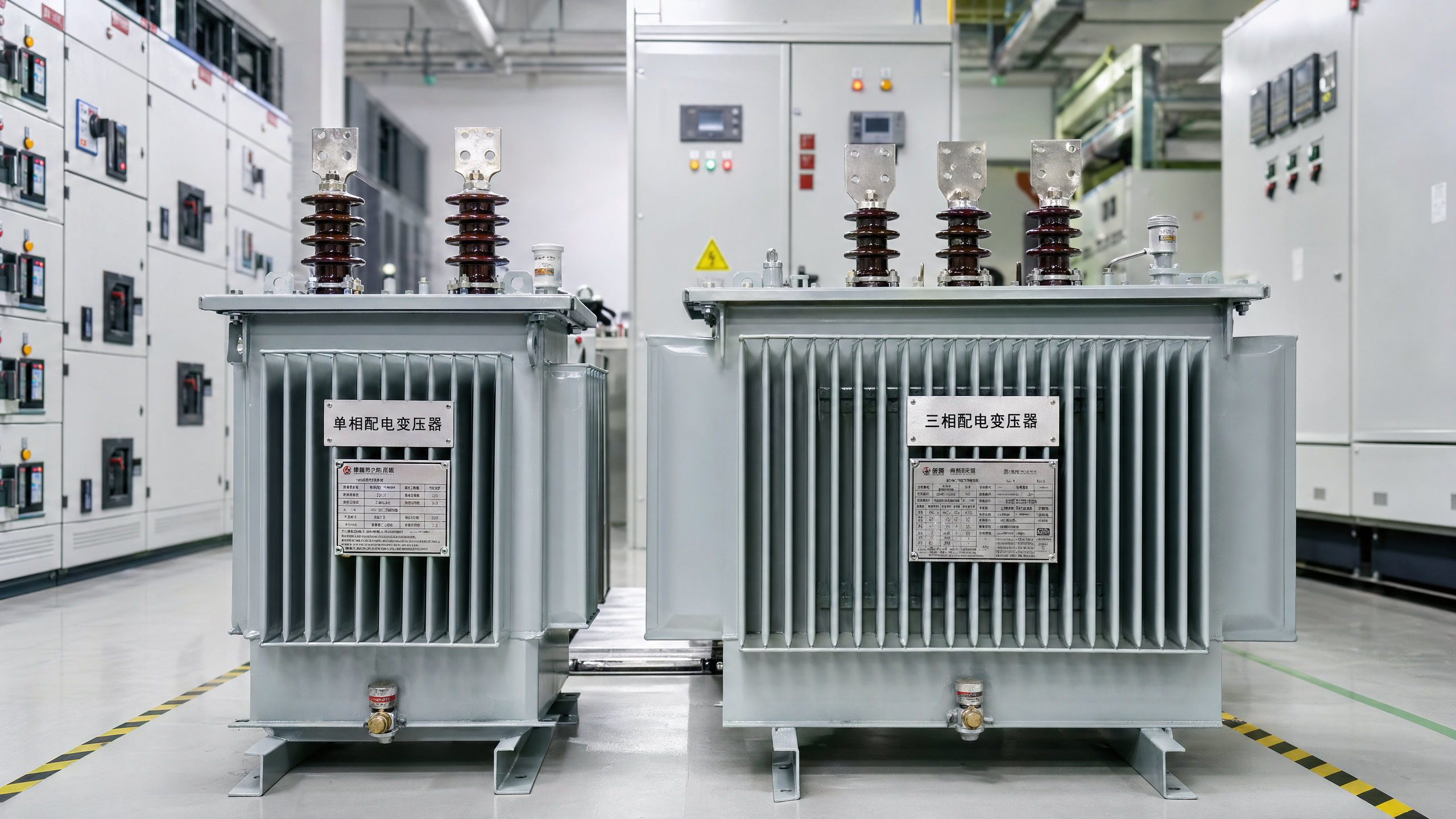
Choosing between a SINGLE-PHASE DISTRIBUTION TRANSFORMER and a three-phase unit can directly affect system efficiency, installation cost, and long-term reliability. For buyers, distributors, and project planners in industrial power applications, understanding the key differences is essential to making the right investment. This guide compares both options to help you identify which transformer solution best fits your load, site conditions, and business goals.
In industrial equipment and components procurement, transformer selection is rarely just a technical detail. It influences cable design, protection coordination, spare parts planning, maintenance routines, and future expansion capacity. A mismatch between transformer phase type and actual load profile can lead to overspending at the start or underperformance later.
For information seekers, purchasing teams, and distributors, the practical question is not which option is universally better, but which one fits the application better. Site load in kVA, equipment mix, voltage level, installation environment, and distribution architecture all matter. In many projects, the best decision comes from balancing power quality, lifecycle cost, and deployment flexibility.
Shandong Yide Transformer Co., Ltd. focuses on oil-immersed transformers, dry-type transformers, box-type substations, and high and low voltage switchgear. With ISO9001 and ISO14001 management system certification, modern production and testing equipment, and product lines covering capacities up to 500000 KVA and 1500 sets of switchgear annually, the company supports a wide range of industrial and utility-side power distribution needs.
Understanding the Basic Difference Between Single-Phase and Three-Phase Distribution Transformers
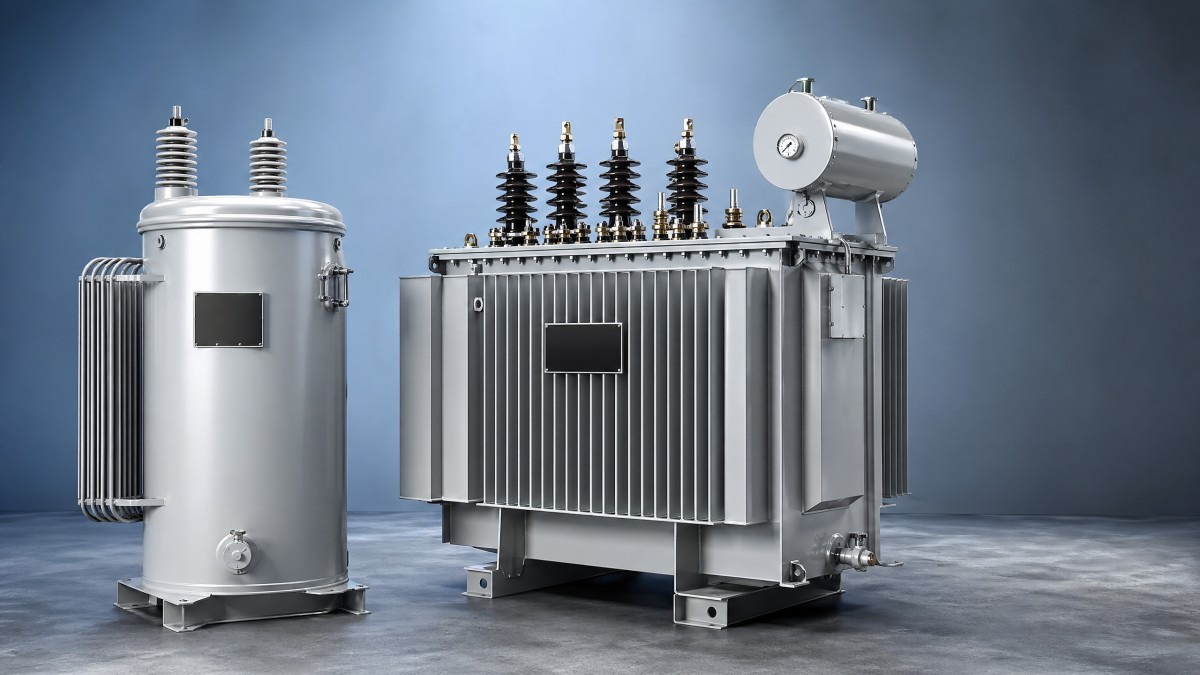
A single-phase distribution transformer transfers power through a single alternating voltage waveform. It is commonly used where loads are relatively small, scattered, or mainly single-phase by nature, such as rural lines, residential clusters, light commercial sites, and some auxiliary industrial systems. Typical applications may range from 5 kVA to 167 kVA, though actual ratings depend on local grid practice and project design.
A three-phase distribution transformer works with three alternating waveforms offset by 120 degrees. This design is better suited for medium and heavy loads, especially where motors, pumps, compressors, HVAC systems, CNC equipment, or production lines operate continuously. In industrial environments, three-phase units are frequently selected from 100 kVA to 2500 kVA or more, depending on substation arrangement and load density.
The key technical distinction is load delivery efficiency. Three-phase systems can transmit more power with less conductor material compared with equivalent single-phase setups. That is why factories, logistics parks, mining sites, renewable energy stations, and process manufacturing plants often standardize around three-phase distribution for core operations.
However, simpler does not mean inferior. In remote installations, temporary projects, or facilities with uneven or modest power demand, a single-phase distribution transformer may offer easier installation, lower first-stage investment, and faster replacement. For distributors and EPC contractors, this matters when serving price-sensitive projects with shorter decision cycles of 2 to 6 weeks.
Core comparison at a glance
The table below summarizes the practical differences that usually affect equipment selection, quotation strategy, and downstream maintenance planning.
For most industrial buyers, the table points to a simple rule: if the site has multiple motors, continuous production equipment, or planned expansion within 12 to 36 months, three-phase usually deserves priority. If the site is small, decentralized, or temporary, single-phase may be the more economical match.
How Load Profile, Installation Conditions, and Expansion Plans Shape the Right Choice
The first selection step is to evaluate actual load behavior instead of just connected capacity. A site may have 180 kVA of installed equipment, but if simultaneous demand peaks at only 95 kVA and the load is mostly lighting, office devices, or intermittent small tools, the transformer decision may differ from a plant with a stable 75% motor load ratio running 16 to 24 hours per day.
Load type matters as much as load size. Resistive loads, such as heaters and basic lighting, are less demanding in terms of phase balance. Inductive loads, such as pumps and compressors, perform better on three-phase supply because starting current, torque stability, and equipment efficiency are generally more favorable. In many industrial workshops, even a 30 kW to 55 kW motor cluster can justify a three-phase configuration.
Installation environment is another major factor. Indoor substations, urban retrofits, containerized systems, and locations with strict fire safety requirements often favor dry-type solutions. In this context, buyers comparing phase options may also review dry-type product lines such as the 10KV SC(B)10 SERIES OF EPOXY RESIN CAST DRY-TYPE TRANSFORMER, especially where low noise, reduced maintenance, and compact installation are priorities.
Expansion planning should not be overlooked. If the project is in phase 1 of a larger development, selecting a transformer only for current load can create replacement costs in 1 to 2 years. Many procurement teams set a future margin of 15% to 30% above present peak demand, especially in food processing, textile production, warehousing automation, and renewable integration projects.
A practical selection checklist
- Measure peak demand, average load, and planned expansion over the next 12, 24, and 36 months.
- Identify the ratio of motor loads, heating loads, lighting loads, and sensitive electronic loads.
- Check whether the incoming utility supply is already single-phase or three-phase at the project boundary.
- Review installation space, ventilation, ambient temperature, and fire protection requirements.
- Confirm if spare capacity, N+1 backup, or modular expansion is needed for business continuity.
Typical fit by application scenario
Smaller agricultural pumping points, remote offices, kiosks, and temporary site offices often match single-phase distribution. By contrast, machine shops, foundries, cold storage, plastic extrusion lines, and integrated commercial buildings almost always benefit from three-phase distribution because operational stability and power quality become more critical as equipment density rises.
For distributors, aligning inventory with regional demand is also important. In some markets, single-phase units move faster in scattered utility and construction channels, while three-phase units dominate OEM projects, industrial tenders, and substation package solutions.
Cost, Efficiency, and Maintenance: Looking Beyond the Purchase Price
Initial equipment price is often the first comparison point, but it should not be the only one. A single-phase distribution transformer may have a lower unit price and simpler associated installation in smaller systems. Yet in a plant with multi-point three-phase loads, using several single-phase units instead of one properly matched three-phase transformer can increase wiring complexity, balancing difficulty, and maintenance workload.
Operational efficiency should be evaluated over a 5-year to 15-year horizon. Losses, temperature rise, and load factor all affect running cost. A transformer that performs efficiently at 60% to 80% load can reduce energy waste compared with one that is oversized or poorly matched. In continuous-duty facilities operating 6000 to 8000 hours annually, even modest loss differences can become meaningful in total ownership cost.
Maintenance also differs by deployment strategy. A single large three-phase unit centralizes inspection points, while multiple smaller single-phase units may improve redundancy but increase routine checks. Procurement teams should compare inspection frequency, spare parts standardization, and downtime impact. In many industrial facilities, planned inspection intervals of 6 months and detailed electrical checks every 12 months are common baseline practices.
Manufacturing quality further affects lifecycle value. Shandong Yide Transformer Co., Ltd. produces oil-immersed transformers, dry-type transformers, box-type substations, and switchgear with advanced testing equipment and product lines that have passed routine, type, and special tests at the National Quality Supervision and Inspection Center. For buyers, this matters because consistency in loss control, noise performance, and short-circuit resistance often influences long-term operating stability more than headline price alone.
Lifecycle comparison factors
The table below helps purchasing teams compare cost-impact areas that are often missed during first-round quotations.
The key takeaway is straightforward: lower upfront cost does not always mean lower project cost. For industrial buyers, transformer phase choice should be reviewed together with cables, switchgear, protection devices, maintenance labor, and expected production growth.
Selection Risks, Common Mistakes, and a Better Procurement Process
One common mistake is sizing only for current nameplate load and ignoring diversity factor or expansion. Another is selecting a single-phase transformer because the immediate price looks attractive, even though the plant already plans to add 3-phase motors or automated lines within the next 18 months. These decisions can lead to premature replacement, load imbalance, or additional switchgear modification later.
A second mistake is treating transformer selection separately from the rest of the power distribution package. In practice, transformer type should be reviewed together with incoming voltage, outgoing feeders, enclosure requirements, cooling method, and protection coordination. This is especially important for buyers comparing oil-immersed units, cast resin dry-type units, and compact box substations in one tender process.
A better procurement method is to use a 4-step evaluation process: define load and voltage, shortlist transformer type, verify installation conditions, and compare lifecycle cost. This process reduces the risk of overbuying or underbuying. For example, a buyer reviewing 10 kV distribution for a workshop should not only compare kVA rating, but also insulation class, cooling environment, short-circuit withstand capability, and service accessibility.
Shandong Yide Transformer Co., Ltd. supplies multiple categories including S13, S20, S22, SCB12, SCB14, and SCB18 series, plus YBW European style box transformers, ZGS American style box transformers, and high/low voltage cabinets such as KYN28, HXGN, MNS, GCS, GCK, GGD, GGJ, and JP. For project buyers and channel partners, a broader product portfolio can simplify package matching across the transformer room, substation skid, and downstream distribution cabinet.
Risk-control points before placing an order
- Confirm whether the load is primarily single-phase, mixed, or heavily three-phase motor-driven.
- Check voltage class, capacity margin, and installation altitude or ambient temperature requirements.
- Review test documentation, certification status, and routine inspection procedures.
- Align transformer choice with switchgear, protection settings, and future feeder arrangement.
- Clarify lead time, spare parts support, and after-sales response expectations, such as 24-hour to 72-hour technical reply windows.
When dry-type solutions deserve extra attention
In commercial buildings, public infrastructure, hospitals, data-support spaces, and indoor industrial areas, dry-type transformers can be attractive because they reduce oil-related handling concerns and fit better in enclosed environments. In such cases, buyers may also compare options like the 10KV SC(B)10 SERIES OF EPOXY RESIN CAST DRY-TYPE TRANSFORMER when safety, low maintenance, and indoor placement are major design targets.
That does not mean dry-type always replaces oil-immersed equipment. Outdoor deployment, utility edges, and high-capacity applications may still favor oil-immersed designs, depending on thermal performance, installation context, and maintenance resources.
FAQ for Buyers, Distributors, and Project Planners
The questions below reflect common concerns from sourcing teams, engineering consultants, and regional distributors comparing transformer options for industrial and commercial power systems.
How do I know if a single-phase distribution transformer is enough?
It is usually enough when the load is small, localized, and dominated by lighting, office equipment, small appliances, or limited auxiliary devices. If your total demand remains relatively stable below roughly 100 kVA to 150 kVA and there is no short-term plan for large motor installation, single-phase may be practical. Still, the final decision should be based on actual load study rather than rough estimation.
Why is three-phase often preferred in industrial projects?
Because industrial sites often run motors, compressors, conveyors, pumps, and machining centers that perform better on three-phase supply. Three-phase distribution also supports better load balancing and more efficient transmission in medium-to-large systems. If your facility operates multiple loads above 15 kW or has continuous production for 8 to 24 hours daily, three-phase is usually the stronger candidate.
What documents should procurement teams request from suppliers?
At minimum, request technical datasheets, nameplate details, outline drawings, loss data, insulation information, test records, certification status, and recommended installation conditions. For integrated projects, it is also useful to request matching information for switchgear, cable connection, and maintenance guidance. This reduces redesign risk during installation and commissioning.
What is a reasonable delivery and support expectation?
Lead time varies by transformer type, voltage class, and customization level. Standard configurations may move faster, while special impedance, enclosure, or substation package requirements can extend delivery to several weeks. Buyers should also ask about inspection scheduling, packing method, transport support, and technical response timing during commissioning.
Single-phase and three-phase transformers each have a valid place in modern power distribution. The better choice depends on real operating load, equipment type, installation environment, and future growth expectations. For small, decentralized, or temporary demand, single-phase can be practical and economical. For machinery-intensive, scalable, and continuously operating sites, three-phase usually delivers better overall value.
With experience in oil-immersed transformers, dry-type transformers, box substations, and high and low voltage switchgear, Shandong Yide Transformer Co., Ltd. can support buyers, distributors, and project planners in matching the right transformer solution to actual application needs. If you are comparing configurations, refining a tender list, or planning a new power distribution project, contact us to get a tailored solution, discuss product details, and explore the most suitable transformer arrangement for your site.